
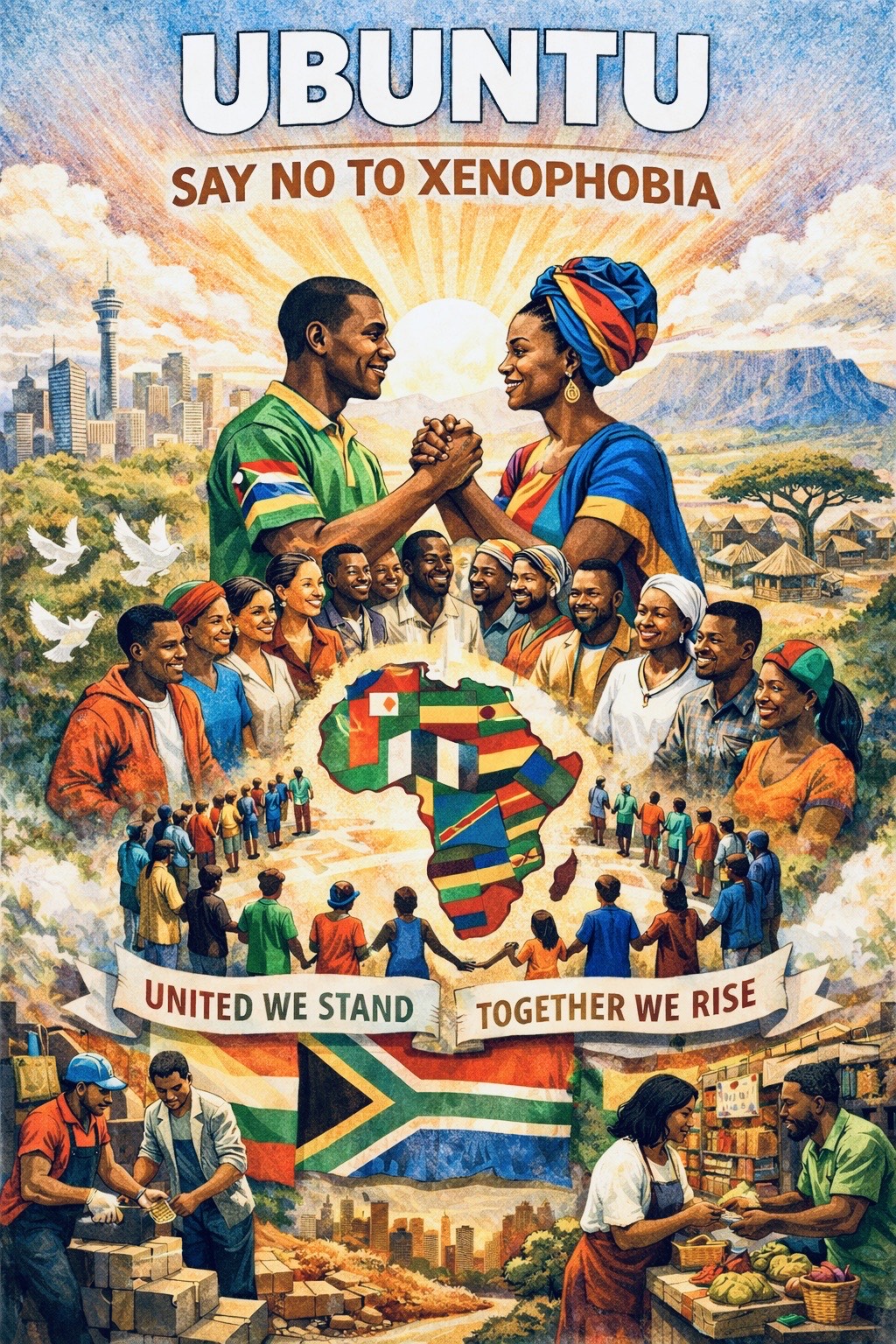
Thabo and Mamadou lived on the same narrow street in Diepsloot for three years. Thabo, a South African father of three, spent his mornings walking to the main road looking for casual construction work that rarely materialized. Mamadou, who fled conflict in the DRC, spent his mornings opening a small spaza shop made of neatly painted corrugated iron. For three years, they were more than just neighbors. Thabo bought his daily bread from Mamadou and Mamadou often gave Thabo’s youngest daughter a free piece of fruit or a sweet on Tuesday afternoons. They shared a common enemy: the rising cost of paraffin, the lack of reliable electricity and the quiet, heavy ache of poverty that defines life on the margins.
But last year, when the whispers started in the community, the bread and the fruit were forgotten. The whispers said that the foreigners were the reason the local clinic had no medicine. They said the outsiders were stealing opportunities meant for the soil. When the mob finally marched down the street, Thabo didn’t join them, but he didn’t stop them either. He watched through a crack in his curtains as the shop he had frequented for years was stripped bare. In the end, Mamadou lost his livelihood and his safety, while Thabo lost the only shop on the block that offered him credit when he was short on cash. Both men ended the day poorer, more afraid and further apart than they had ever been.
The Heart of the Matter
This story is not an isolated incident. It is the daily reality of a cycle that continues to plague South Africa. We often treat xenophobia as a security issue or a matter of policing, but it is actually a deeply human social and economic fever. When a body is sick, it develops a fever to fight an internal infection. In South Africa, the infection is not our brothers and sisters from across the border. The real infection is systemic inequality, a staggering unemployment rate and the feeling that the promise of 1994 has stalled for the average person. Xenophobia is the misplaced reaction to very real pain.
The reason these tensions persist despite government intervention is that the root causes remain unaddressed. It is far easier for a local leader to point a finger at a migrant than to explain why a housing project has been delayed for a decade. This creates a scapegoat trap where the most vulnerable members of society are pitted against each other to fight over the crumbs of a stagnant economy. Furthermore, a broken immigration system at Home Affairs leaves both locals and migrants in a state of constant frustration, leading people to take justice into their own hands because they no longer trust the institutions meant to protect them.
Expanding the Horizon of Solutions
To solve this, we must move beyond temporary policing and move toward radical empathy and structural reform. At AmityPoint Institute, we believe the path forward requires a multi-layered approach that touches every part of our society.
First, we must implement Community Dialogue Circles. Peace is not just the absence of violence; it is the presence of understanding. We need structured, safe spaces in our townships where locals and migrants can speak openly about their fears and grievances. When people realize they are both struggling with the same high rents, the same lack of policing and the same poor infrastructure, the foreigner stops being a villain and starts being a comrade in the struggle for a better life.
Second, we need to foster Economic Integration. Instead of viewing informal traders as rivals, we should incentivize joint business ventures. Imagine a municipal program that offers lower licensing fees or grants for businesses that are co-owned by a South African and a foreign national. By tying our economic fates together, we make violence against the other a strike against oneself. When Thabo and Mamadou own the shop together, the community is less likely to burn it down.
Third, we must demand Ethical Leadership. Using anti-migrant rhetoric to score quick points during an election cycle is like throwing a match into a field of dry grass. Real leadership means telling the difficult truth: that our problems are structural. We need a national pact where leaders across all parties agree to stop using human beings as political footballs.
Finally, we must return to our roots through Pan African Education. Our schools must teach the history of African solidarity with pride. Every South African child should grow up knowing that when our liberation leaders were in exile, countries like Zambia, Tanzania, Ethiopia and Nigeria gave them homes, education and passports. We owe our freedom to the very people we are now pushing away. We must re-teach the philosophy of Ubuntu, which reminds us that my humanity is caught up in yours.
A Shared Future
The Rainbow Nation was never meant to be a finished product that we simply inherited. It is a daily choice that must be made by every person living within the South African borders. To end xenophobia, we don’t just need more police or better fences; we need more empathy. We need to remember that the person across the street is not a threat to our survival, but a partner in our progress.
Let us stop fighting over the crumbs and start demanding a bigger loaf for everyone. By choosing compassion over suspicion, we can build a South Africa that is finally big enough for everyone who calls it home.