
By Beline Nyangi and reviewed by Smaragda Vasileiadi
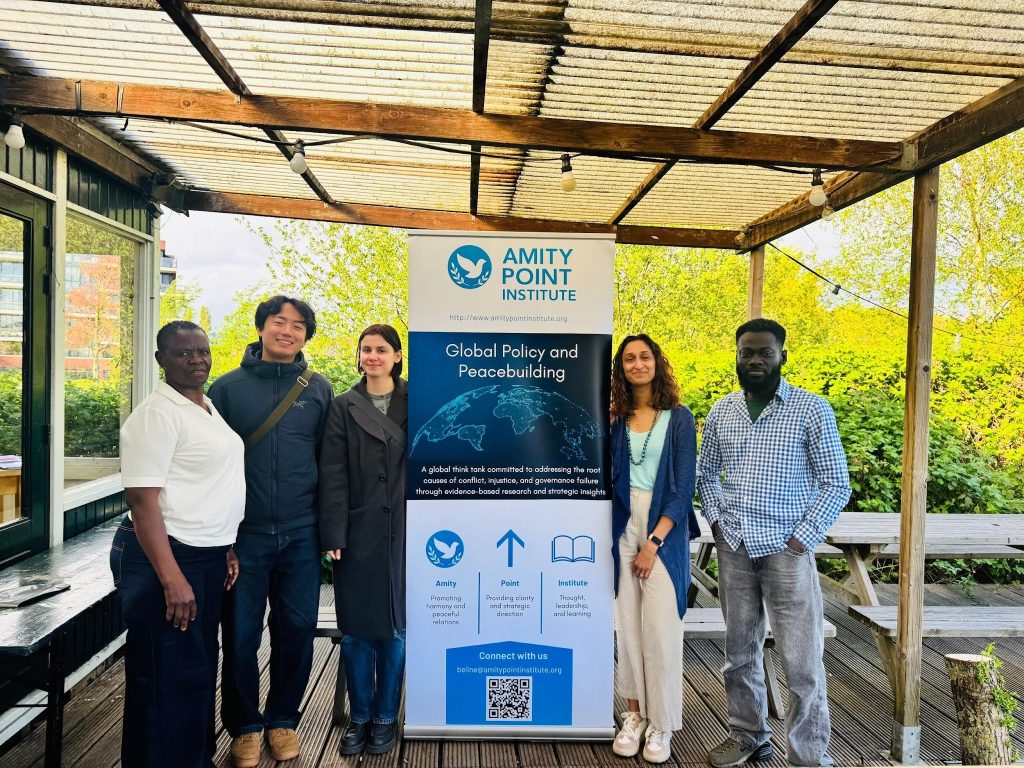
At the AmityPoint Institute, we recently hosted a workshop exploring a question that continues to shape global politics: What Drives United States Foreign Policy, particularly in relation to energy, security and global influence?
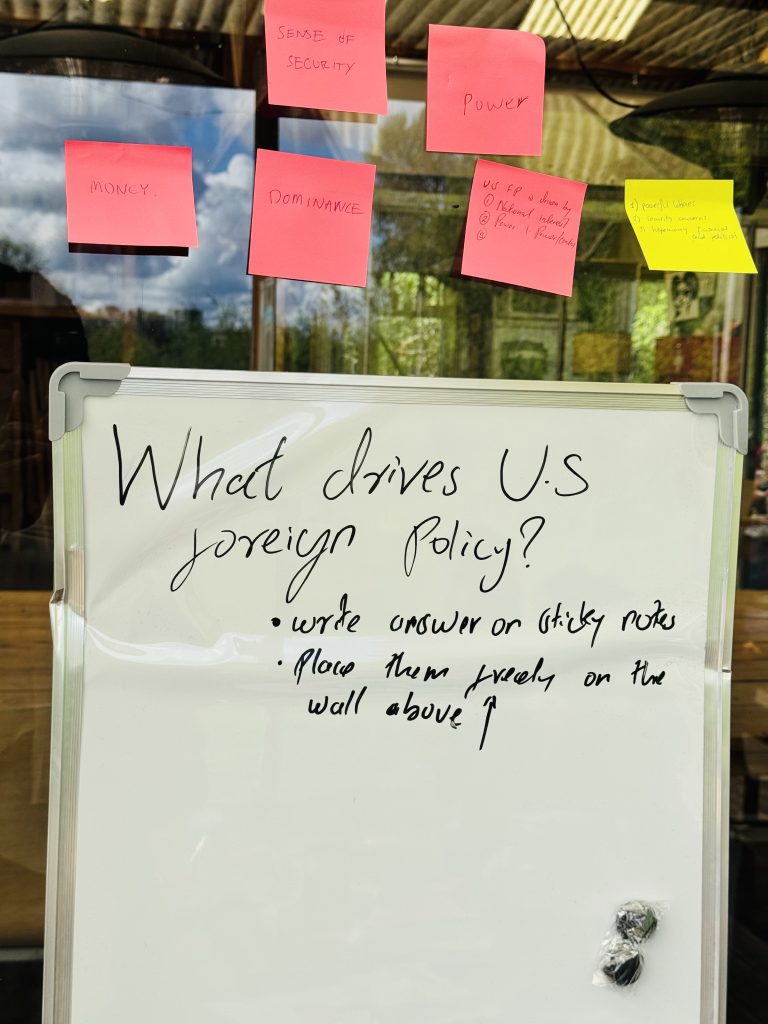
Photo: taken in house by AmityPoint staff member
Rather than delivering a traditional presentation, the session was designed as a shared exploration. Participants brought prior research, but just as importantly, they brought raw perspectives, questions and lived interpretations. What emerged was a layered and sometimes uncomfortable understanding of how power operates in international affairs.
A Question That Opens Many Doors
The discussion began with a simple exercise. Participants were asked to write one word that comes to mind when thinking about U.S. intervention.
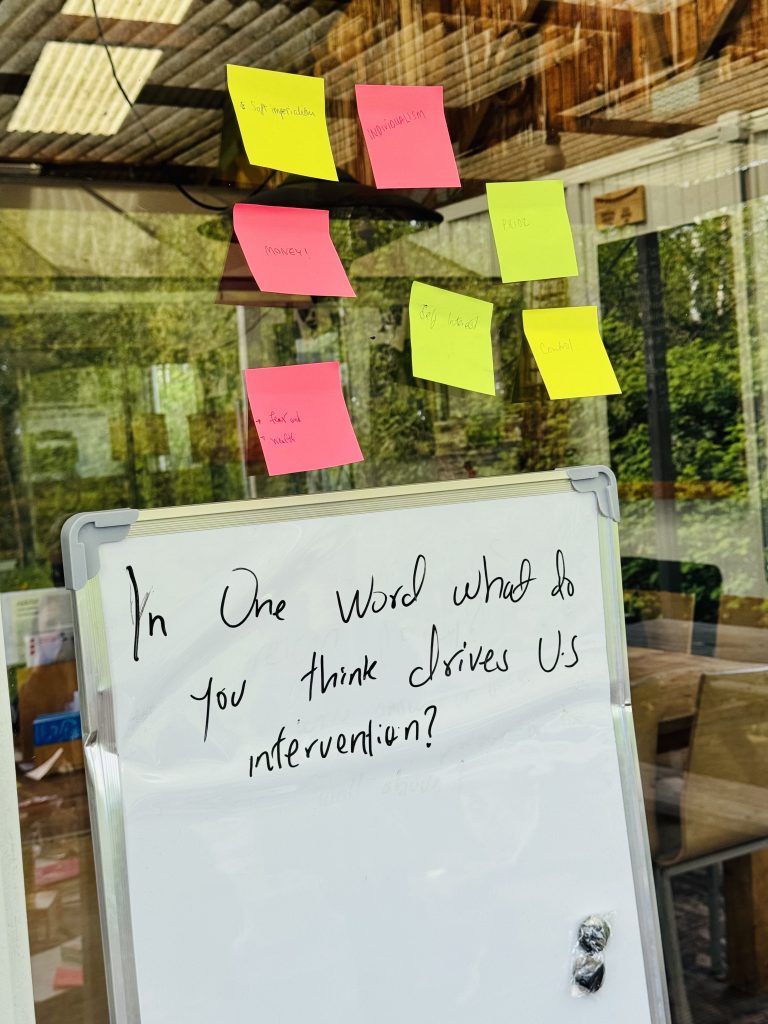
Photo: taken in house by AmityPoint staff member
The responses quickly filled the room. Wealth. Power. Dominance. Security. Control. National interest. Influence. Money. Political agendas.
Even at this early stage, it was evident that U.S. foreign policy cannot be explained by a single motivation. It is shaped by a convergence of forces, each reinforcing the other in complex ways. Yet beneath this diversity of answers, a deeper theme began to take shape.
Control as a Central Thread
As the conversation unfolded, participants repeatedly returned to the idea of control.
Whether expressed through economic systems, military presence or political alliances, U.S. foreign policy was widely understood as an effort to maintain global influence. This influence is not always exercised through direct force. In many cases, it operates through softer mechanisms such as financial systems, diplomatic pressure and strategic partnerships.
The role of the U.S. dollar, for instance, was seen as a powerful instrument of influence, particularly through mechanisms such as sanctions and control over global financial systems, shaping global trade and limiting the autonomy of other nations. Similarly, alliances and interventions were often interpreted as ways to preserve a particular global order rather than simply respond to immediate threats.
At the same time, participants raised an important concern. Strategies built on maintaining dominance may become increasingly difficult to sustain in a world where power is more distributed and global awareness is growing.
Energy and Security: Intertwined Forces
To structure the discussion, the workshop introduced a simple framework: energy and security
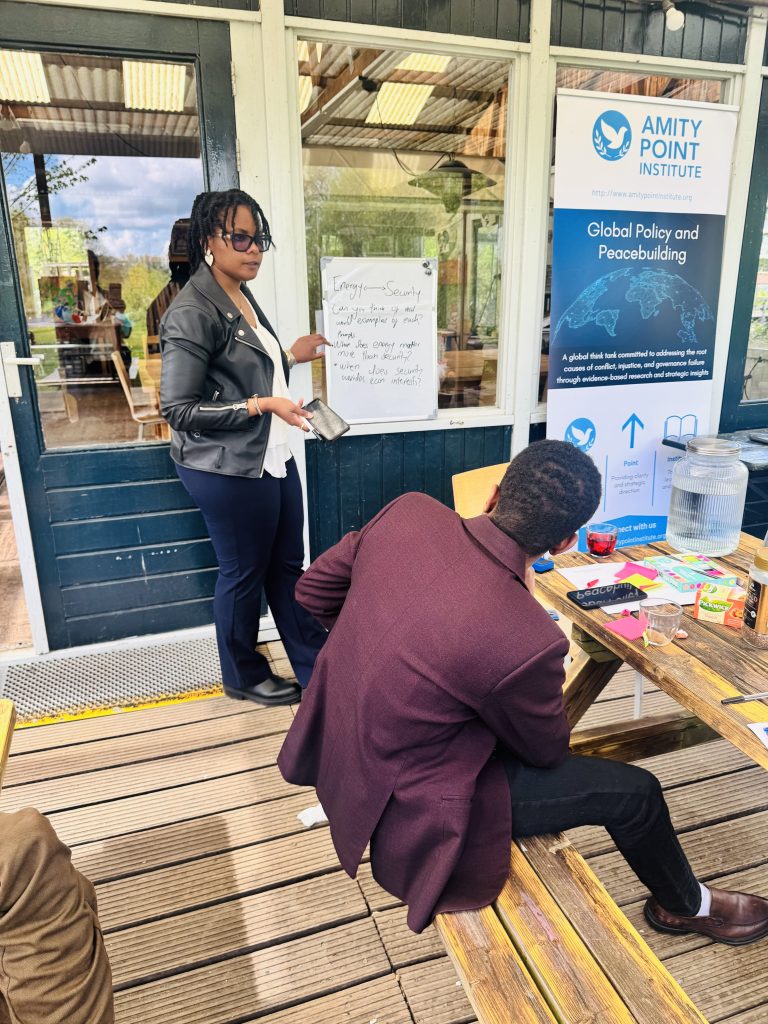
Photo: taken in house by AmityPoint staff member
Energy, particularly oil, was understood as a foundation of modern economies. It is not just about fuel but about the systems that sustain everyday life, from manufacturing to technology. Control over energy resources and supply routes therefore carries significant economic and political weight.
Security, in contrast, was framed more broadly. It includes military strength, geopolitical positioning and the ability to influence regional and global stability.
What became clear is that these two forces are deeply interconnected. Security concerns are often used to justify actions that also serve economic interests. At the same time, energy dependencies can create new security vulnerabilities.
ENERGY —————————- SECURITY
(oil, economy) (power, influence)
← sometimes align →
← sometimes conflict →
← often reinforce each other →
Energy and security sometimes align, sometimes conflict, but often reinforce each other in
shaping foreign policy decisions.
Iran: Strategic Position and Global Leverage
Iran emerged as a particularly complex case.
Its geographical position, particularly its proximity to the Strait of Hormuz, a key global oil transit route, gives it significant strategic importance.
Official U.S. narratives often emphasize security concerns, particularly around nuclear development and regional influence. However, participants questioned whether these explanations fully capture the motivations behind U.S. actions.
Some argued that security concerns may at times function as a justification for deeper strategic and economic objectives. Iran’s relationships with other major powers such as Russia and China further complicate the picture, positioning it within a broader contest for global influence.
The discussion highlighted how energy and security are not easily separable in this context. Control over oil routes, regional alliances and political stability all intersect in shaping policy decisions.
Venezuela: Resource Wealth and Political Fragility
Venezuela presents a different yet equally revealing case.
The country holds vast oil reserves but faces significant economic and political challenges. U.S. involvement has often been framed around issues such as governance, democracy and security concerns like drug trafficking.
However, these narratives exist alongside clear energy interests. Venezuela’s decision to nationalize its oil industry and strengthen ties with countries like Russia and China reduced U.S. influence, raising questions about the motivations behind external pressure and intervention.
Unlike Iran, Venezuela’s challenge lies not in access to oil but in its ability to extract and manage it effectively. This creates a different kind of dynamic, where external actors may seek influence through technological or economic leverage.
In both cases, the line between energy interests and security concerns becomes blurred.
Fear and a Changing Global Order
Another strong theme in the discussion was fear.
Participants spoke about a deeper concern within U.S. foreign policy: the fear of losing global dominance. As new powers rise and global dynamics shift, maintaining influence becomes more uncertain.
This fear may help explain why certain interventions occur even when they are unpopular domestically or criticized internationally. The stakes are not only immediate but tied to long-term positioning in the global order.
In this sense, foreign policy is not only reactive but also anticipatory. It reflects not just current realities but expectations about the future.
Leadership and Structural Forces
The role of leadership, particularly during the Trump administration, was also discussed.
Participants noted a shift toward more direct and unilateral approaches, as well as a more open expression of power politics. At the same time, the discussion recognised that foreign policy is not shaped by individuals alone. Deeper structures, including economic interests, institutional dynamics and geopolitical strategies, continue to operate across administrations. Leaders may influence tone and style but underlying patterns often remain consistent.
This raises important questions about how foreign policy is formed and who ultimately shapes it.
A Space for Ongoing Inquiry
The workshop did not arrive at a single conclusion and that was part of its strength.
Instead, it revealed the complexity of U.S. foreign policy, particularly in relation to Iran and Venezuela. Energy, security, economic interests and geopolitical strategy all play a role, often in ways that are not immediately visible.
Overall, the discussion suggested that official explanations may only tell part of the story. To understand global politics more fully, it is necessary to look beneath the surface and engage with the deeper dynamics at play.
At AmityPoint Institute, the workshop created space for continued reflection and dialogue on these issues. Not to provide final answers, but to encourage critical thinking, open dialogue and a more nuanced understanding of power in a changing world.
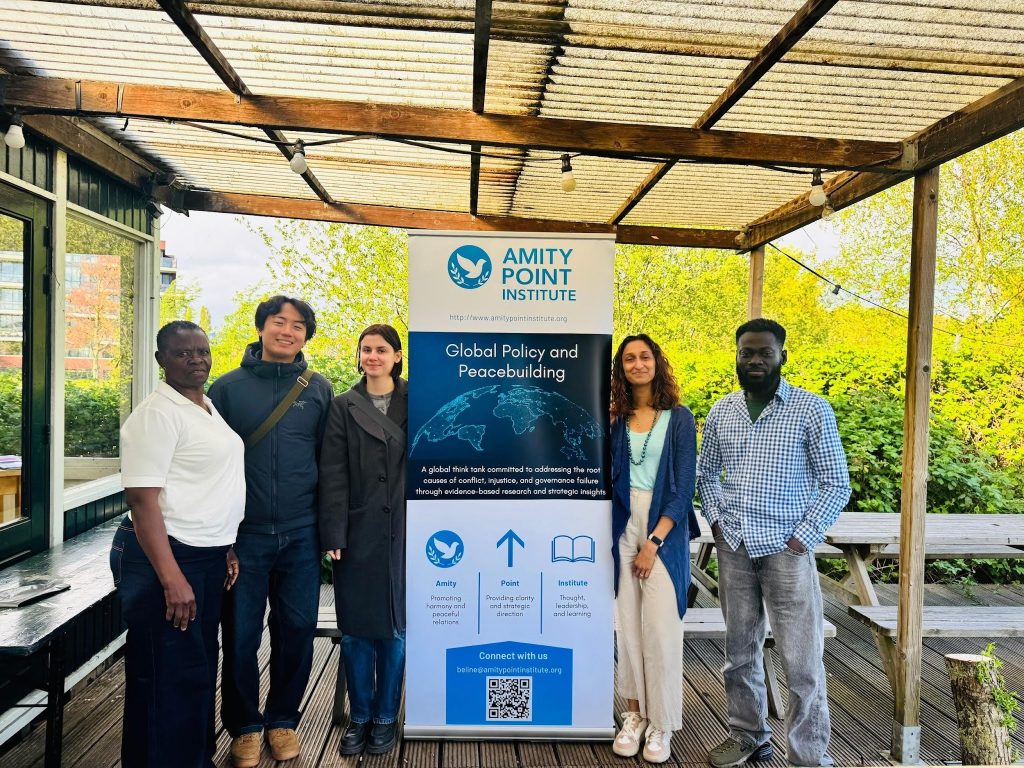
Photo: taken in house by AmityPoint staff member